The Power Wall: Why Energy Infrastructure is the Ultimate

The global economy has hit a hard physical wall. Decades of financial engineering, software-driven efficiencies, and asset-light business models are colliding with a brutal, unyielding constraint: electrons. The commercial scaling of artificial intelligence models, the aggressive reshoring of heavy industrial manufacturing, and the electrification of transportation are no longer waiting for legacy power grids to catch up. They are breaking them.
Wall Street has badly mispriced this transition. Traditional equity analysts continue to treat power consumption as an operational footnote, an adjustable utility line item akin to office rent. That is a fatal error. We are witnessing the forced physical industrialization of the digital economy. Power is the new compute, and whoever controls the generation assets dictates the terms of modern capitalism.
The Power Wall: When Silicon Meets the Substation

A hyperscale artificial intelligence training cluster does not run on ambition and venture capital; it runs on hundreds of megawatts of uninterrupted baseload power. While a traditional cloud data center operated comfortably within the tolerances of municipal distribution networks, modern AI infrastructure demands the energy footprint of an industrial smelter or a mid-sized municipality. The math is merciless. When thousands of high-density nodes are packed into a single footprint, the local grid does not just strain—it fractures.
Yet, public utilities are paralyzed. Bound by rigid rate-of-return regulations, multi-year public utility commission hearings, and decades of structural underinvestment in high-voltage transmission lines, regulated utilities cannot move at the speed of Silicon Valley. The result is a catastrophic speed mismatch. Technology giants with sovereign-wealth-scale balance sheets are bypassing the public grid entirely.
Consider the structural reality of corporate power procurement. The landmark multi-gigawatt direct power purchase agreements inked between mega-cap tech entities and nuclear or natural gas operators are not clever green-marketing stunts. They are defensive maneuvers. Big Tech is effectively socializing the capital risk of energy generation by locking up private baseload capacity, leaving ordinary ratepayers and industrial competitors to absorb the escalating volatility of congested regional grids.
| Infrastructure Metric | Traditional Data Center Era (2010–2020) | Modern AI Infrastructure Era (Present) |
|---|---|---|
| Average Facility Load | 10 to 30 Megawatts | 100 to 500+ Megawatts |
| Primary Power Source | Regional Grid Mix (Standard Tariffs) | Direct PPAs (Nuclear, Renewables, Gas) |
| Grid Interaction | Passive consumer of municipal power | Active co-investor in generation assets |
| Primary Bottleneck | Fiber-optic connectivity & land acquisition | Transformer availability & transmission capacity |
This dynamic creates a profound market divergence. Enterprises relying on spot-market electricity in congested regions like PJM or ERCOT are sitting on unhedged margin compression bombs. Wholesale electricity prices in constraint-heavy nodes are spiking, injecting a persistent, structural inflationary pulse directly into the industrial economy that central bank rate cuts cannot fix.
Capital Allocation and the Balance Sheet Trap

Capital allocation models across institutional portfolios are fundamentally outdated. For twenty years, portfolio managers chased asset-light tech monopolies that required little more than server racks and fiber-optic cables to scale globally. Today, the marginal dollar of technological expansion requires pouring concrete, forging heavy electrical steel, and securing multi-decade fuel supplies.
The financing architecture required for this buildout is colliding with a deteriorating sovereign debt backdrop. European sovereigns are pinned beneath escalating debt-to-GDP ratios, while fiscal deficits in the United States keep long-term Treasury yields stubbornly elevated. When sovereign borrowing costs surge, the cost of capital for multi-decade, capital-intensive energy projects spikes in tandem. Traditional municipal bond funding for grid infrastructure is buckling under the weight of these macro realities.
Consequently, private equity, venture debt, and corporate balance sheets are stepping into the void. But this creates a dangerous illusion of stability. When tech conglomerates directly finance nuclear restarts or greenfield natural gas plants, they are taking on balance-sheet risk that equity analysts are entirely unequipped to value. What happens to the equity valuation of a software titan when its multi-decade power purchase agreement locks in electricity rates at cyclical peaks while compute efficiency gains eventually outpace power demands?
Institutional investors must ruthlessly audit portfolio holdings for grid exposure. Companies that do not control their energy inputs are essentially shorting grid reliability. Margin degradation will not come from labor costs or software licensing fees; it will arrive via the plug.
The Equipment Bottleneck and Sovereign Vulnerabilities
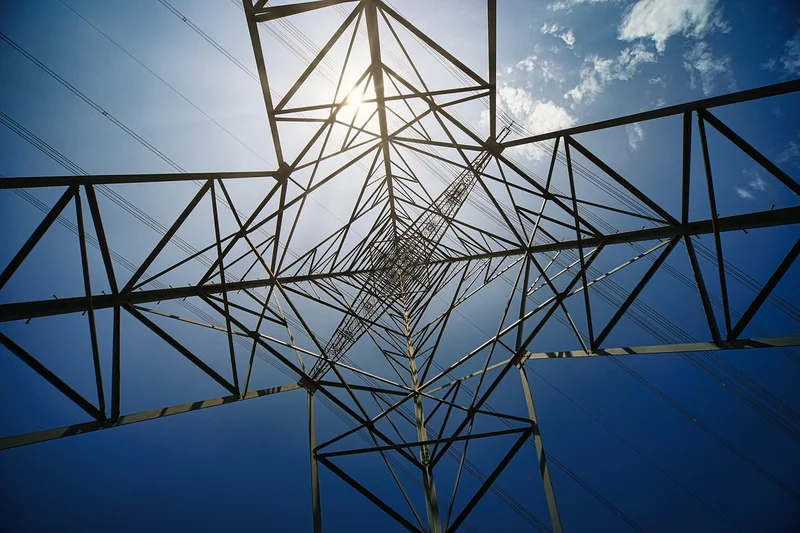
Capital alone cannot buy an energized substation if the physical hardware does not exist. The structural bottleneck of the 2020s is not just generation capacity; it is the extreme scarcity of high-voltage transformers, switchgear, high-voltage alternating current (HVAC) cables, and advanced power electronics. Lead times for large power transformers have stretched past three to four years, creating an insurmountable physical barrier to entry for new data center developments.
This hardware scarcity exposes profound vulnerabilities in global supply chains. The raw materials and specialized manufacturing capabilities required for heavy electrical equipment—such as grain-oriented electrical steel—are heavily concentrated in geopolitical flashpoints. Trade policies, tariffs, and export controls on critical grid components act as invisible speed bumps on national economic competitiveness.
Governments are waking up to this vulnerability, attempting to force industrial policies through expedited permitting and strategic subsidies. Yet, state-level friction remains an impenetrable fortress. Siting a high-voltage transmission line or a natural gas peaking plant encounters fierce local resistance. NIMBYism is no longer a localized zoning nuisance; it is a macroeconomic headwind that threatens national security and artificial intelligence dominance.
Regions that fail to reform their regulatory queues and streamline inter-state transmission approvals will watch capital flee to jurisdictions with pragmatic, aggressive industrial energy strategies. The economic map of the next decade will be drawn around the map of functioning power lines.
Strategic Horizon and Institutional Playbook

The convergence of digital acceleration and physical energy constraints is permanent. Institutional capital must abandon the comforting fiction that technology can scale infinitely into a frictionless cloud. Every algorithm runs on a watt, and every watt must be generated, transmitted, and protected.
Navigating this regime shift requires structural contrarianism. Investors must rotate away from asset-light pretenders hiding behind software multiples and overweight the tangible, hard-asset enablers powering the industrial transition.
To capitalize on this structural mispricing, institutional allocators should execute the following three-step operational mandate:
- Enforce Rigorous Energy Audits on Portfolio Holdings
- Strip away the corporate ESG window dressing and examine the physical power purchase agreements of every operating asset. Disinvest from companies heavily reliant on congested regional spot markets; overweight enterprises with proprietary, locked-in baseload PPA contracts that insulate them from wholesale price spikes.
- Overweight the Hardware Supply Chain Oligopoly
- Shift capital away from downstream tech end-users facing margin compression and allocate aggressively toward the tier-one manufacturers of high-voltage transformers, grid-monitoring software, and specialized electrical steel. These industrial enablers possess insurmountable pricing power amid chronic physical shortages.
- Factor Regulatory Interconnection Risk into Valuations
- Discount the cash flow projections of any infrastructure or data center project sitting in dysfunctional regulatory queues. Prioritize investments operating within pro-infrastructure sovereign jurisdictions that feature streamlined permitting and aggressive grid modernization mandates.